
Not long ago, we saw the emergence of sim swapping attacks utilizing a loophole in the two-factor authentication process. Now in the latest, researchers from Check Point have discovered vulnerabilities in certain Android-based phones including the likes of Samsung, Huawei, Sony, and LG which allows attackers to access your information.
These phone companies collectively happen to make up 50% of all Android phones according to statistics from 2018, therefore, chances are that every second Android user is now vulnerable to the attacks identified by Check Point.
The technology exploited is called Over-the-Air provisioning (OTA) which has been used commonly by cellular networks to update network settings on a user’s phone. As it requires nothing more than a tap, its ease of use is behind its popularity as a method to do so.
How it does this is through classical phishing. When the suggested settings message appears, one is naturally inclined to believe that is must be from a legitimate authority. However, there is no actual way of verifying where it originated from due to the industry-standard contained within the Open Mobile Alliance Client Provisioning (OMA CP) protocol, and this very ambiguity is what attackers exploit.
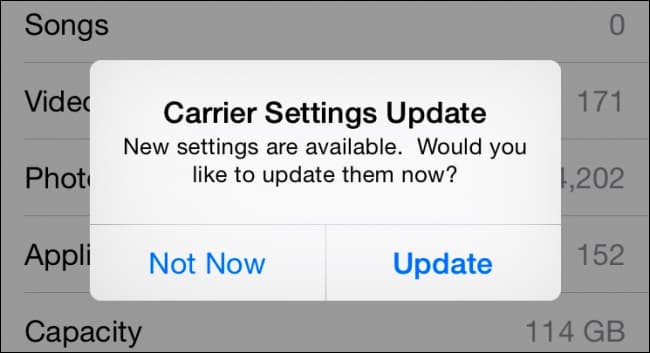
They send OTP messages claiming to be a cellular network and when an unsuspicious user accepts them, they’re basically agreeing to however the hackers want them to handle the information routing process even if the phone cannot be hacked in this way.
To list them, the settings that can be changed includes browser homepage & bookmarks, mail servers, proxy addresses and much more. On the lighter side, Android users will at least now know the reason behind their settings randomly changing.
The equipment required to construct such an attack isn’t expensive either making it attractive to a wider pool of black hat hackers. As Check Point puts it,
To send OMA CP messages, an attacker needs a GSM modem (either a $10 USB dongle, or a phone operating in modem mode), which is used to send binary SMS messages, and a simple script or off-the-shelf software, to compose the OMA CP.
As with any responsible disclosure, the aforementioned vendors were informed of these security flaws in March. While Samsung and LG released patches in May and July respectively, Huawei plans to do so for its next generation of Mate Series or P series smartphones.
On the other hand, Sony has refused to fix anything citing the use of standard measures as a pretext. Moreover, Check Point’s researchers successfully tested the exploits on different phones including Huawei P10, Sony Xperia XZ Premium, LG G6, and the Samsung Galaxy S9.
It is important to note that among these brands, Samsung phones were the most vulnerable as they featured no authenticity check at all contrary to the others.
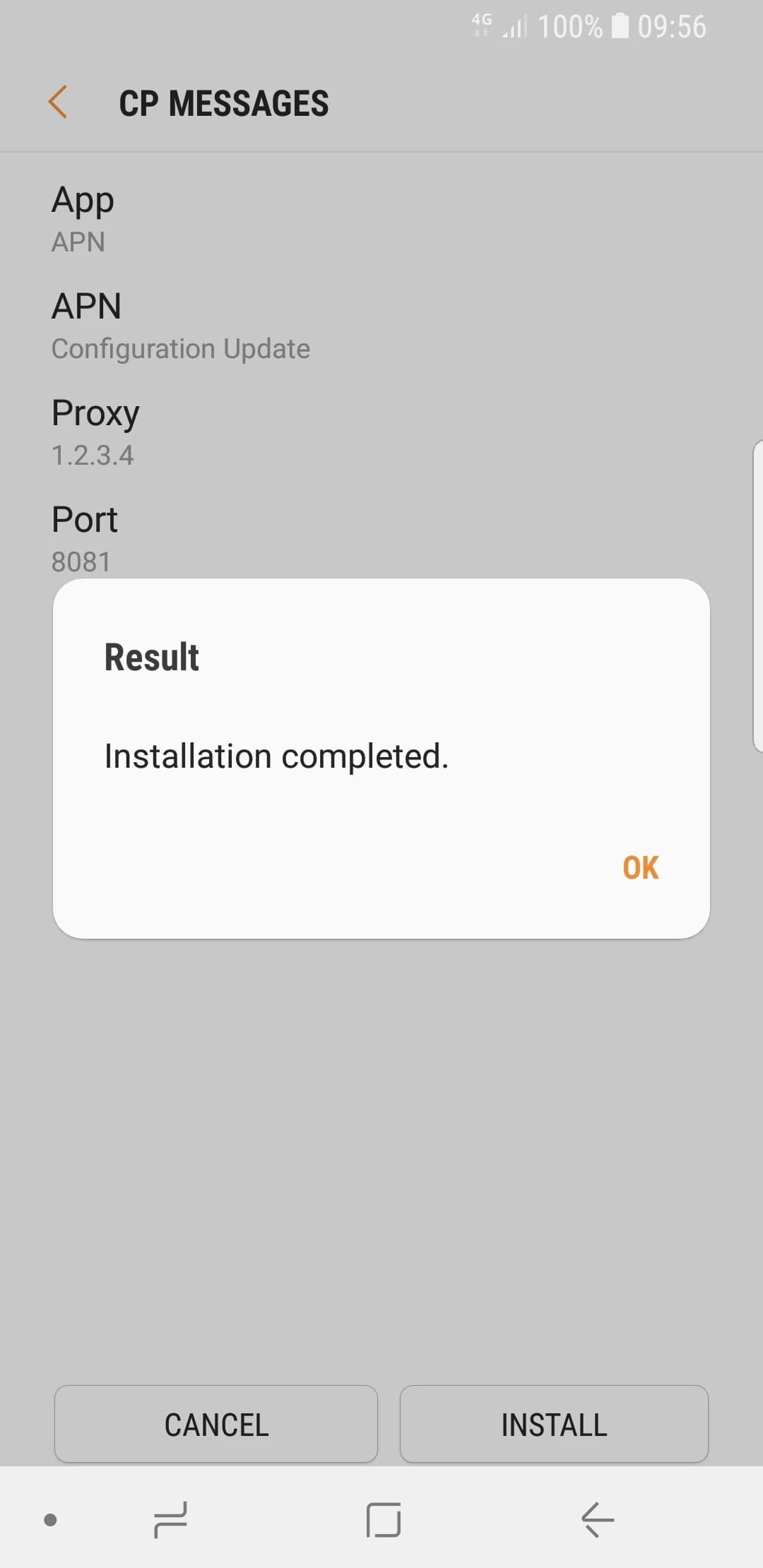
Testing the exploit on a Samsung Phone, image by Check Point.
However, the fact that Huawei and Sony have left their current phones vulnerable is very alarming and if anything, it is an open invitation for their users to switch to safer alternatives. Perhaps, Apple can have a good laugh about it? or maybe not since Google hackers recently exposed how iPhones were being hacked for years using malicious websites.

Comments
Post a Comment